AGP Executive Report
Last update: 2 days agoOver the last 12 hours, coverage touching Egypt and travel-related interests was dominated by finance and mobility signals rather than a single headline event. Reuters reported that Egypt’s net foreign assets fell sharply by $6.07 billion in March to $21.34 billion, attributing the decline to the Iran war’s impact (higher energy import costs and weaker tourism) and portfolio outflows by nervous foreign investors. In parallel, the Gulf markets were broadly positive—most Gulf indices ended higher on strong earnings and optimism around a potential U.S.-Iran peace deal—but the reporting also stressed uncertainty around the Strait of Hormuz, a factor that can feed into regional risk sentiment relevant to Egypt’s external balances.
Tourism and aviation items in the same window were more operational and promotional. Air Cairo announced it has begun expanding Libyan services after launching flights to Tripoli’s Mitiga Airport on 1 May, with plans for new routes to Benghazi, Misrata, and Sebha. There were also multiple travel-industry and consumer-facing pieces (e.g., ITB China 2026 being fully sold out and expanding, plus various travel/experience promotions), but the evidence provided does not tie these directly to a specific Egypt policy change in the last day.
Egypt-specific cultural and sports coverage also appeared, though it is not clearly “breaking news.” One article framed Mohamed Salah as “the Egyptian King” in a career retrospective, while another highlighted Egypt’s reliance on Salah in the context of the 2026 World Cup. Separate items included broader regional travel and safety guidance—such as warnings that travelers could be denied boarding if passport validity rules (e.g., “date of issue” thresholds for EU entry) aren’t checked—plus health and disease coverage (including hantavirus concerns on a cruise ship), which may indirectly affect travel planning.
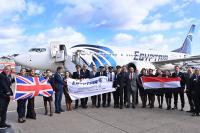
Looking back 12 to 72 hours, the pattern is consistent: Egypt-related items are present but often sit within wider regional or global narratives. Examples include continued reporting on Egypt’s tourism growth and airline/aviation developments (e.g., EgyptAir receiving Boeing 737 MAX aircraft in earlier coverage), while geopolitical reporting (U.S.-Iran tensions, sanctions on migrant recruitment networks, and regional diplomatic shifts) provides the backdrop for why travel and capital flows remain sensitive. However, the most recent 12-hour evidence is relatively sparse on concrete Egypt tourism policy moves—so the clearest “development” in this rolling window remains the March external-sector deterioration highlighted by the net foreign assets data.
Note: AI-generated summary based on news headlines, with neutral sources weighted more heavily to reduce bias.